Agent View
The site as an AI agent gets it, beside the site as a person sees it. What it can read, what it has to cut away, and what it never sees.
Skip to content
Skip to content
Connect is A program of NAMI NH
Get Help Now: call 988
Contact US
Image: Connect - Training Professionals & Communities in Suicide Prevention & Response
Who We AreConnect PrinciplesMeet the Connect TeamWho We TrainOrganizations & BusinessesFederal/State Agencies & CommunitiesK-12 SchoolsIndividuals & Small Groups
eLEARNING PLATFORM
Resources
The rest of the page is in full screen.
## Resources Our resources are tailored to address the multifaceted needs of those affected by suicide, offering evidence-based strategies and practical advice for prevention, intervention, and healing. Whether you are seeking information for professional development or community engagement, our goal is to provide you with the resources to create a safer, more connected environment for everyone. If you are seeking individualized support for your own mental health, someone you care about, or as a survivor of suicide loss, please visit the resources available at the NAMI New Hampshire’s website. www.naminh.org ## Resource Library Welcome to the Resource Library of The Connect Program, an essential component of NAMI New Hampshire’s comprehensive approach to suicide prevention and postvention. This library offers a wide array of materials, including research articles, training manuals, toolkits, and multimedia resources, all aimed at equipping professionals and communities with the knowledge needed to effectively address suicide. Whether you are a mental health professional, educator, community leader, business professional, or other provider, our Resource Library provides accessible, evidence-based information to support your efforts. By exploring these resources, you can gain valuable insights into best practices, innovative strategies, and compassionate approaches to fostering mental wellness and resilience within your community. - [988 Lifeline](https://988lifeline.org/) - [Community Readiness Tool - For Any Community](https://theconnectprogram.org/wp-content/uploads/2026/09/Connect_Postvention_Readiness_Assessment-Community_Edition-FILLABLE.pdf) - [Community Readiness Tool - For American Indian/Alaska Native Communities](https://theconnectprogram.org/wp-content/uploads/2026/09/Connect_Postvention_Readiness_Assessment-AIAN_Edition-FILLABLE.pdf) - [New Hampshire Suicide Prevention Council](https://preventsuicidenh.org/) - [New Hampshire Annual Suicide Prevention Reports](https://www.naminh.org/suicide-prevention/#AnnualReport) - [Education Development Center – Community-Led Suicide Prevention Model and Toolkit](https://www.edc.org/community-led-suicide-prevention) - [Recognize the Warning Signs Poster](https://theconnectprogram.org/wp-content/uploads/2026/02/Recognize-the-Warning-Signs-Flyers-2025-US.pdf) - [NAMI – National Office](https://www.nami.org/) - [National Institute of Mental Health](https://www.nimh.nih.gov/) - [American Association of Suicidology](https://suicidology.org/) - [Safe and Effective Messaging and Reporting](https://sprc.org/keys-to-success/safe-and-effective-messaging-and-reporting/) - [Recommendations for Media Reporting on Suicide](https://reportingonsuicide.org/) - [National Recommendations for Depicting Suicide](https://theconnectprogram.org/wp-content/uploads/2020/03/Natl-Recommendations-for-Depicting-Suicide.pdf) - [Best Practices for Presentations by Suicide Loss and Suicide Attempt Survivors](https://suicidepreventionmessaging.org/library/special-considerations-telling-your-own-story-best-practices-presentations-suicide-loss-and) - [Telling Your Own Story: Best Practices for Presentations by Suicide Loss and Suicide Attempt Survivors](https://theconnectprogram.org/wp-content/uploads/2025/05/Telling-Your-Story-Handout.pdf) ## 2024 National Strategy for Suicide Prevention [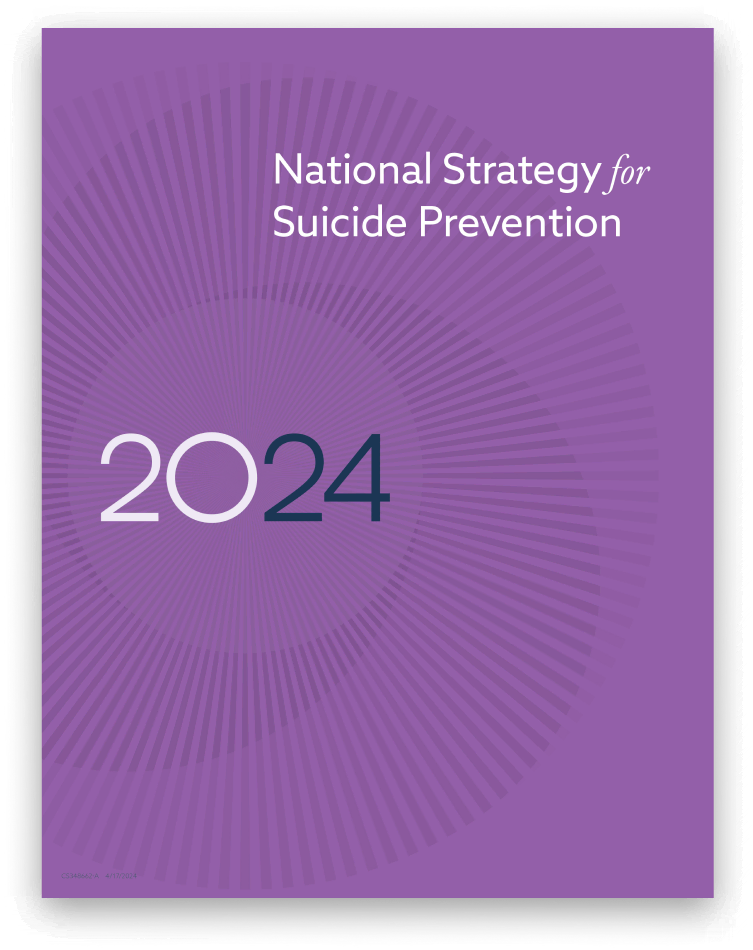](https://theconnectprogram.org/wp-content/uploads/2025/01/National-Strategy-Suicide-Prevention.pdf) [Download PDF](https://theconnectprogram.org/wp-content/uploads/2025/01/National-Strategy-Suicide-Prevention.pdf) The 2024 National Strategy for Suicide Prevention is a bold new 10-year, comprehensive, whole-of-society approach to suicide prevention that provides concrete recommendations for addressing gaps in the suicide prevention field. This coordinated and comprehensive approach to suicide prevention at the national, state, tribal, local, and territorial levels relies upon critical partnerships across the public and private sectors. People with lived experience are critical to the success of this work. The National Strategy seeks to prevent suicide risk in the first place; identify and support people with increased risk through treatment and crisis intervention; prevent reattempts; promote long-term recovery; and support survivors of suicide loss. ### Connect™ fits into each of the strategic directions, including: **Community-Based Suicide Prevention**Connect™ supports community-based suicide prevention through Zero Suicide and Connect trainings. **Treatment and Crisis Services** Connect implements a systemic approach to health care with Zero Suicide framework and contributes to key elements of the Zero Suicide framework. **Surveillance, Quality Improvement, and Research** Connect is effective among diverse populations, resulting in more significant reductions in suicidal thoughts than when compared to other treatments. **Health Equity in Suicide Prevention** Connect is effective among diverse populations. ## Information & Announcements for Connect Suicide Prevention & Postvention Trainers **On this page, Connect Trainers will find tools, materials, and key updates to support new & ongoing suicide prevention/postvention training efforts.** ## Point of Contact for Connect Trainers Susan Ward, NAMI New Hampshire’s Suicide Prevention and Postvention Manager, coordinates support for all Connect trainers. Reach out to Susan for any updates to your trainer profile (e.g. name, email), slide deck needs, evaluation request, or any other needs. Email: [**[email protected]**](https://app.constantcontact.com/pages/campaigns/email) ## "Connect"ion! – A Community of Practice for Connect Trainers **We’re thrilled to announce “Connect”ion! – a new, free, quarterly virtual Community of Practice for Connect trainers in 2025!** - Duration: 90 minutes live, virtual session - What’s Included: professional development, Connect updates, and an opportunity to meet and share experiences with fellow trainers. - Register for more information and to attend! [REGISTER HERE](https://learn.naminh.org/course/connect-cop) ## Are you due for Connect Trainer Reauthorization? Don't Lose Your Ability To Deliver Connect Training! **Trainer reauthorization is required every two years to continue using Connect materials for training.** Since Connect materials are licensed and copyrighted, staying up-to-date is essential. In 2025, we introduced more flexible options to make the reauthorization process easier and more affordable for you or your employer. **Grace Period Through August 30th** If your authorization has expired, no worries! You can continue using Connect materials through **8/30/25** while you make arrangements for reauthorization. Let us help you get back on track. After August 30th if you have not made arrangements for reauthorization, you will be expected to cease and desist from using Connect content and materials. **Reauthorization Options:** - **Customized Workshops:** Tailored, 2-hour workshops for your organization. Contact us for pricing. - **Online Reauthorization Sessions**: $149 per person. Live, virtual 2-hour sessions for Prevention and Postvention trainers, available throughout the year. Find more information, a schedule, and register at the links below. [**Register for Prevention reauthorization** **HERE**](https://learn.naminh.org/course/connect-pi-reauthorization-2025). [**Register for Postvention reauthorization HERE**.](https://learn.naminh.org/course/connect-pv-reauthorization-2025) For any questions or to explore additional reauthorization options, contact Amy Cook at [**[email protected]**](https://app.constantcontact.com/pages/campaigns/email). We’re here to help, so reach out if you’re past your 2-year reauthorization period! ## Essential Tools for Connect Training Delivery **Training Evaluation** It is important for us to collect information and feedback that allows us to measure the effectiveness of Connect and also make improvements. You can either provide a full pre- and post-survey to participants or you can provide them a shorter, online training exit survey. If you need to request a link for the **Training Exit Survey (TES),** please use the link below. [**Request Your TES**](https://airtable.com/appBJNlf47CUzWMTq/shr7aPzxijiI59lKb) **Training Tracker** **We are also asking all Trainers to start using a new Training Tracker to report your training delivery.** It helps us keep our database up to date and ensures you’re recognized as an active trainer. Please complete this after each training you deliver. [**Save this link in your browser favorites!**](https://airtable.com/appBJNlf47CUzWMTq/pag1Xu45AecnjFq2j/form) **Connect Trainer Quarterly eNews** The Connect Program will be sending a quarterly eNews through Constant Contact to all Connect Trainers. Constant Contact provides a feature to opt out if you choose to not receive these communications. If you are not receiving this communication and want to, please contact Susan Ward at [**[email protected]**](mailto:[email protected]). **Translated Materials** Through a partnership with State of Vermont- Agency of Human Services/ Department of Health, a limited amount of Connect materials were translated into 8 languages to meet the needs of communities seeking suicide prevention awareness and training. A 3-hour version of the Connect Community Helper Suicide Prevention training PowerPoint slide deck, Recognize the Warning Signs poster/handout, and The Words We Use Matter handout from the Suicide Prevention Resource Center were translated into the following languages: - Swahili - French - Somali - Nepali - Spanish - Arabic - Bosnian - Maay Maay If you speak, and work with a community that speaks, one of these languages and would like the materials to deliver the Connect training in that language, please contact Susan Ward at [**[email protected]**](mailto:[email protected]).        ## Find answers to common inquiries about our trainings, services, and experience. ## General [What is community helper (formerly "gatekeeper") training?](https://theconnectprogram.org/resources/#collapse-1fa31746adbbc1b8e044) Community Helper training equips individuals of all types and roles (e.g., family, teachers, coaches, healthcare providers) within any community with skills to recognize suicide warning signs and offer support. It teaches how to identify at-risk individuals, engage in empathetic conversations, and connect them with resources. It aims to create a supportive network within the community, where people are empowered to intervene and prevent suicide. [Can prevention/intervention and postvention both be taught in a day?](https://theconnectprogram.org/resources/#collapse-778a6cc6adbbc1b8e044) Prevention/intervention and postvention focus on different aspects of suicide and are generally taught separately. Prevention/intervention addresses identifying warning signs and intervening before an attempt, while postvention supports those after a suicide. Although postvention can act as a form of prevention by addressing the aftermath and preventing further tragedies, when these topics are introduced for the first time, they are generally taught separately. This ensures that participants can fully engage with and absorb the unique content of each training. [How is community helper (formerly “gatekeeper”) training different from training for specific disciplines?](https://theconnectprogram.org/resources/#collapse-f8eb73b6adbbc1b8e044) The Connect training has 3 modules. Module 3 is discipline-specific (schools, social services, mental health, healthcare, community helper, first responders). The community helper training is for anyone and everyone in the community, (families, faith leaders, coaches, those working in any industry, etc.) Depending on the goals of the training, we can help you decide the best fit for your participants. [What is the difference between Connect Prevention/Intervention and Connect Postvention training?](https://theconnectprogram.org/resources/#collapse-8dab3e66adbbc1b8e044) **Prevention/Intervention** teaches how to recognize and respond to suicidal thoughts or behaviors before an attempt. **Postvention** focuses on supporting individuals and communities after a suicide, offering grief support, reducing stigma, and helping to prevent further suicides. [Who should attend a postvention training?](https://theconnectprogram.org/resources/#collapse-a20f9426adbbc1b8e044) People that work in colleges schools and youth-focused roles (school counselors, administrators), mental healthcare professionals, cris responders, healthcare professionals, first responders and community safety, workplace and organizational leaders, faith leaders, peer supporters, anyone in a role where others may turn to them in a crisis, people working in high-risk populations (youth, veterans, behavioral health) and teams wanting to create a coordinated response plan. [Who should attend a Connect Postvention Planning Session?](https://theconnectprogram.org/resources/#collapse-bacfc9a6adbbc1b8e044) A **Postvention Planning Session** is for key stakeholders who have decision-making authority or responsibility in developing or managing the services or policies implemented following a suicide or sudden death. Attendance requires prior participation in Postvention training. [How long should a community or organization wait before participating in suicide prevention training after experiencing a suicide loss?](https://theconnectprogram.org/resources/#collapse-32a22a66adbbc1b8e044) There isn’t a single fixed rule, but most postvention and prevention experts suggest being intentional and conservative with timing rather than rushing into training**.** Grief after suicide can be intense and unpredictable. It is recommended that those that experience a loss should wait several months and ensure emotional readiness before attending a training. Staff should only attend when they feel ready and supported. This timeline can look different for everyone. Attending a suicide prevention training may bring up big emotions about warning signs that may have been missed. If having a suicide prevention training, it is recommended to do so when people feel ready and not near the anniversary of the event and in a neutral location. Postvention consultation services can assist decision makers in creating and modifying postvention plans and guidance for memorials and safe communication. [How can I know if my community is ready to do postvention planning?](https://theconnectprogram.org/resources/#collapse-446acc66adbbc1b8e044) Use one of these Community Readiness tools to determine how your community can prepare for postvention training and future work developing an effective postvention response plan. - [For Any Community](https://theconnectprogram.org/wp-content/uploads/2026/09/Connect_Postvention_Readiness_Assessment-Community_Edition-FILLABLE.pdf) - [For AI/AN Communities](https://theconnectprogram.org/wp-content/uploads/2026/09/Connect_Postvention_Readiness_Assessment-AIAN_Edition-FILLABLE.pdf) [What can Consultation Services be used for?](https://theconnectprogram.org/resources/#collapse-5fc91d26adbbc1b8e044) Consultation Services can be used to strengthen suicide prevention, intervention, and postvention efforts within your school, organization, or community. We provide expert guidance related to both suicide prevention and suicide postvention on topics such as policy development, staff training, crisis response planning, community coordination, and implementing evidence-informed strategies to support safety, resilience, and healing after a suicide or traumatic loss. [Are trainings or services offered in languages other than English?](https://theconnectprogram.org/resources/#collapse-c4738fa6adbbc1b8e044) Connect Suicide Prevention for Community Members Training and Connect Suicide Prevention for School Personnel are online, self-paced trainings that are offered in both English and Spanish. [Can you meet the cultural needs of diverse communities?](https://theconnectprogram.org/resources/#collapse-c9b86176adbbc1b8e044) Yes. The Connect Suicide Postvention Program is specifically designed to be adaptable and culturally responsive, not a one-size-fits-all training. Scenarios and role-plays can be modified to reflect real cultural norms and experiences. NAMI NH staff works with each host organization and team to identify needs and determine how to best meet those throughout the training event. [How does NAMI NH set and incorporate travel expenses for their staff?](https://theconnectprogram.org/resources/#collapse-5c0c1466adbbc1b8e044) Actual travel expenses for in-person events are added to the final invoice after the event, with no additional administrative fees or upcharges. NAMI NH staff are mindful of budget constraints and make every effort to keep travel costs as low as possible, and we welcome recommendations for reasonably priced lodging in your area. For planning purposes, we suggest budgeting approximately $3,000 per staff member per trip—although actual costs are typically lower, this amount has proven to be a reliable estimate. [How much do Connect Training and Consultation Services cost?](https://theconnectprogram.org/resources/#collapse-e8c5cdc6adbbc1b8e044) For all suicide prevention and postvention trainings, costs vary depending on multiple factors including training selected, number of participants, method of delivery, location of training delivery, and number of trainers. Costs include NAMI NH staff time and all materials. Please reach out for a quote. [Should staff who have recently experienced a suicide loss attend a suicide prevention or postvention training?](https://theconnectprogram.org/resources/#collapse-3c1bdf36adbbc1b8e044) A **Postvention Planning Session** is for key stakeholders who have decision-making authority or responsibility in developing or managing the services or policies implemented following a suicide or sudden death. Attendance requires prior participation in Postvention training. [Can the Connect Team assist if we have questions after training?](https://theconnectprogram.org/resources/#collapse-a43a5a46adbbc1b8e044) Yes, the Connect Team is available to answer your questions at any time. [What is the contracting, invoicing, and payment process?](https://theconnectprogram.org/resources/#collapse-116a6746adbbc1b8e044) After you make a final decision about which training service will meet your community’s needs, a Training Agreement will be created and sent to you for review and approval. After we receive the signed Agreement, your training event date will be reserved and confirmed. After the training event is completed, you will be issued an invoice within 1-2 weeks. Invoices can be paid in a variety of ways. The NAMI NH Business Office is available to assist with any needs you may have related to invoicing or payments. [How much notice is required to book a training date?](https://theconnectprogram.org/resources/#collapse-3cdf0746adbbc1b8e044) We require a 6–8-weeks after the signed Training Agreement is received to be able to plan logistics, prepare materials, and if required, ship materials to the training location. [How many people can attend a Connect training?](https://theconnectprogram.org/resources/#collapse-d6dcab76adbbc1b8e044) We typically recommend no more than 35 participants and can discuss your training needs. [Can Continuing Education (CE) credits be offered for Connect trainings?](https://theconnectprogram.org/resources/#collapse-b1f2de66adbbc1b8e044) CEs can be offered for Connect trainings that are two hours or more. If you are planning a multi-day Connect Train-the-Trainer or a Connect Training & Planning Session, the CEs will only be issued for the training day. For in-person and live, virtual Connect trainings, CEs are from NASW New Hampshire which are transferrable to most states. If your audience requires CEs from a different institution or field, please reach out. Depending on the time available, we may be able to apply for additional approvals. [Can we invite people from outside our organization to attend a training?](https://theconnectprogram.org/resources/#collapse-5f8efaa6adbbc1b8e044) Depending on the goals of the training and type of training you are planning, yes, the Connect Program is more than just a training. It is a multi-system approach that helps build a **coordinated system** across schools, healthcare providers, first responders, workplaces and faith and community organizations. The experience is more comprehensive, productive, and meaningful when community partners are also involved. ## Training for Students [How many students can be trained in the Youth Leader program?](https://theconnectprogram.org/resources/#collapse-1fa31746adbbc1b9ec22) The program accommodates up to 30 students and 15 adults, who will co-lead future trainings. [How many adults should be involved in the Youth Leader program?](https://theconnectprogram.org/resources/#collapse-778a6cc6adbbc1b9ec22) At least 2 adults should be trained along with a minimum of 6 students to ensure program sustainability. [Do students need parent/guardian permission to participate?](https://theconnectprogram.org/resources/#collapse-f8eb73b6adbbc1b9ec22) Yes, parental permission is required. Schools/organizations are responsible for obtaining and managing permission forms, using either the provided template or their own form. [What is the cost of the Youth Leader Training program?](https://theconnectprogram.org/resources/#collapse-f1eecb16adbbc1b9ec22) Costs vary based on factors like training format, location, number of participants, and required materials. The range for Connect Youth Leader is $2,500 - $7,000 (based on 2025 rates and subject to change). Your cost will be based on the level of service and factors related to the delivery of the service. Contact us for a cost quote via our Contact Us form or email [[email protected]](mailto:[email protected]). [Can special formatting or language requirements be accommodated in a quote or invoice?](https://theconnectprogram.org/resources/#collapse-83dcb3e6adbbc1b9ec22) Yes, we can adjust quotes, contracts, or invoices to meet specific requirements. Let us know your needs, and we’ll work with you to meet them. [What happens when a Youth Leader student graduates?](https://theconnectprogram.org/resources/#collapse-a20f9426adbbc1b9ec22) Graduates cannot use the curriculum or materials after graduating. It is recommended that each school program train a cohort of new students within their school each year to replace graduating Youth Leaders and ensure sustainability for the program. [What if a Youth Leader adult co-leader leaves?](https://theconnectprogram.org/resources/#collapse-a120c346adbbc1b9ec22) If an adult co-leader leaves, they are no longer authorized to use the curriculum or materials outside the district where they were trained. [Can middle school students participate?](https://theconnectprogram.org/resources/#collapse-c948e756adbbc1b9ec22) The program is designed for high school students, but younger students may participate if they are mature, interested, and able to commit. Discuss with your NAMI NH Connect Trainer before inviting middle school students. [Do adult Youth Leader co-leaders need to be employed at the school?](https://theconnectprogram.org/resources/#collapse-efb15696adbbc1b9ec22) No, adults can be volunteers, parents, PTA members, or community leaders, as long as they are screened and approved by the school. They should be experienced with youth and committed to the program. [Can high school Youth Leaders train at other schools?](https://theconnectprogram.org/resources/#collapse-378338f6adbbc1b9ec22) Youth Leaders can train within their own school district. They can collaborate with Youth Leaders from other districts for joint events but cannot train an audience of only students from another district. [Can non-school youth organizations use the Youth Leader program?](https://theconnectprogram.org/resources/#collapse-b3cd04a6adbbc1b9ec22) Yes! The program is available to organizations like YMCAs, summer camps, and community youth groups that want to engage in suicide prevention. [Can we host just the Day 2 training for youth and adults?](https://theconnectprogram.org/resources/#collapse-4d315d36adbbc1b9ec22) Yes! You can host Day 2 training for a mix of youth and adults to build interest in a future Youth Leader program. Contact us to explore this option. [How can I get more information about the Youth Leader program?](https://theconnectprogram.org/resources/#collapse-379de8c6adbbc1b9ec22) Fill out our interest form, and we'll reach out with more details. You can also check out our recorded Youth Leader Program Overview presentation on our eLearning platform. [What if a student who recently lost someone to suicide wants to participate?](https://theconnectprogram.org/resources/#collapse-9e38cfc6adbbc1b9ec22) Students who’ve recently lost someone to suicide may find suicide prevention training difficult. We ask that you speak with the NAMI NH Connect Trainer assigned to your event to assess their readiness and appropriateness for the training. ## Training for Individuals & Small Groups [Why can't individuals sign up for any Connect training?](https://theconnectprogram.org/resources/#collapse-1fa31746adbbc1ba0d10) Connect offers a variety of in-person and online training programs for a variety of audiences. Types of training include: - **Suicide Prevention/Intervention**: A Nationally Designated Best Practice Program, Connect Suicide Prevention/Intervention training utilizes a unique, community-based, public health approach to increase the competence of participants in recognizing and responding to individuals who are suicidal or at risk for suicide. Connect helps participants examine suicide in the context of the individual, family, community, and society. - **Suicide Postvention:** A Nationally Designated Best Practice Program, this training focuses on promoting healing and reducing risk after a suicide. It is geared toward professionals who are involved in responding to a suicide death, such as school counselors, faith leaders, law enforcement, and mental health/substance abuse providers. It is not appropriate for general community members who do not have a direct role in postvention responses. Connect Postvention Training equips key stakeholders in a community with the knowledge and skills to navigate grief and the complex legal and ethical challenges after a suicide. The training can be combined with a Postvention Response Planning Session which is a planning tool to help participants develop protocols for an integrated response system. - **Facilitated Planning Session**: A full day of facilitated strategic planning can be added to your training package. A Suicide Prevention Planning Session will guide participants to develop suicide prevention protocols, practices, or initiatives. The Suicide Postvention Response Planning Session is a planning tool to help participants develop protocols for an integrated response system. Up to 25 key stakeholders with responsibility for suicide prevention or postvention response in your community are invited to participate in the session. - **Train-the-Trainer:** Connect Train-the-Trainer is available in both suicide prevention and postvention for organizations seeking a sustainable way to deliver quality training to employees or community members. This model builds capacity and sustainability for an organization, community, or state to provide ongoing training at no cost in suicide prevention or postvention for a period of two years before reauthorization is required. Using a unique public health and socio-ecological model, Connect training enhances the ability of professionals to provide effective, coordinated, and appropriate responses to suicide across the lifespan and across systems. - **Specialized workshops on a topic related to suicide prevention:** To help organizations and school districts meet the needs of suicide prevention requirements or initiatives, Connect team members can provide 2-3-hour workshops in-person in New Hampshire or virtually for any community on topics related to suicide prevention and postvention. If this is of interest to you, let’s talk about what we can do and what might meet your needs. - **Consultation Services:** NAMI New Hampshire has been a national leader in both the fields of suicide prevention and postvention for many years and we are happy to share our experience with you in order to support your community’s efforts. Consultation services can include information about best-practices, assistance with planning and problem-solving, recommendations for implementation, and more. You can select the consultant of your choice from our team. [Should I participate in suicide prevention or postvention training if I’ve recently lost someone to suicide?](https://theconnectprogram.org/resources/#collapse-778a6cc6adbbc1ba0d10) Postvention is an organized, immediate, short-term, and long-term response in the aftermath of a suicide to promote healing and mitigate the negative effects of exposure to suicide. The U.S. national guidelines developed by the Survivors of Suicide Loss Task Force indicates that an effective postvention response strives to facilitate the healing of individuals from the grief and distress of suicide loss, mitigate other negative effects of exposure to suicide, and prevent suicide among people who are at high risk after exposure to suicide. The Suicide Prevention Resource Center recommends all settings incorporate postvention as a component of a comprehensive approach to suicide prevention. Key principles for creating a comprehensive postvention effort include: - Planning ahead to address individual and community needs - Providing immediate and long-term support - Tailoring responses and services to the unique needs of [suicide loss survivors](https://sprc.org/populations/survivors-of-suicide-loss/) Involving survivors of suicide loss in planning and implementing postvention efforts Connect offers postvention trainings and services to educate key stakeholders in your community about effective postvention response and planning and guide them to develop and implement effective strategies, practices, and protocols that will promote healing. [How do community groups pay for Connect training?](https://theconnectprogram.org/resources/#collapse-f8eb73b6adbbc1ba0d10) For all suicide prevention and postvention trainings, costs vary depending on multiple factors including training selected, number of participants, method of delivery, location of training delivery, and number of trainers. Costs include NAMI NH staff time and all materials. | **Specialized Workshops** | | | | --- | --- | --- | | | **In Person (NH Only)** | **Virtual** | | **2-hours** | $800 | $1,100 | | **3-hours** | $1,100 | $1,400 | | **Consultation** | | | | --- | --- | --- | | | **In Person (NH Only)** | **Virtual or Phone** | | **Per Hour** | $300 | $300 | *Prices current as of December 2024. Please call for updated pricing. *Travel expenses for in-person services are added to the total cost of training package for each NAMI NH staff required for training delivery. *Virtual trainings incur an additional fee per day for IT technical support prior to, and during, the training. ## Training for Organizations [How will our staff access eLearning courses if we purchase seats in bulk?](https://theconnectprogram.org/resources/#collapse-1fa31746adbbc1ba2889) Connect offers a variety of in-person and online training programs for a variety of audiences. Types of training include: - **Suicide Prevention/Intervention**: A Nationally Designated Best Practice Program, Connect Suicide Prevention/Intervention training utilizes a unique, community-based, public health approach to increase the competence of participants in recognizing and responding to individuals who are suicidal or at risk for suicide. Connect helps participants examine suicide in the context of the individual, family, community, and society. - **Suicide Postvention:** A Nationally Designated Best Practice Program, this training focuses on promoting healing and reducing risk after a suicide. It is geared toward professionals who are involved in responding to a suicide death, such as school counselors, faith leaders, law enforcement, and mental health/substance abuse providers. It is not appropriate for general community members who do not have a direct role in postvention responses. Connect Postvention Training equips key stakeholders in a community with the knowledge and skills to navigate grief and the complex legal and ethical challenges after a suicide. The training can be combined with a Postvention Response Planning Session which is a planning tool to help participants develop protocols for an integrated response system. - **Facilitated Planning Session**: A full day of facilitated strategic planning can be added to your training package. A Suicide Prevention Planning Session will guide participants to develop suicide prevention protocols, practices, or initiatives. The Suicide Postvention Response Planning Session is a planning tool to help participants develop protocols for an integrated response system. Up to 25 key stakeholders with responsibility for suicide prevention or postvention response in your community are invited to participate in the session. - **Train-the-Trainer:** Connect Train-the-Trainer is available in both suicide prevention and postvention for organizations seeking a sustainable way to deliver quality training to employees or community members. This model builds capacity and sustainability for an organization, community, or state to provide ongoing training at no cost in suicide prevention or postvention for a period of two years before reauthorization is required. Using a unique public health and socio-ecological model, Connect training enhances the ability of professionals to provide effective, coordinated, and appropriate responses to suicide across the lifespan and across systems. - **Specialized workshops on a topic related to suicide prevention:** To help organizations and school districts meet the needs of suicide prevention requirements or initiatives, Connect team members can provide 2-3-hour workshops in-person in New Hampshire or virtually for any community on topics related to suicide prevention and postvention. If this is of interest to you, let’s talk about what we can do and what might meet your needs. - **Consultation Services:** NAMI New Hampshire has been a national leader in both the fields of suicide prevention and postvention for many years and we are happy to share our experience with you in order to support your community’s efforts. Consultation services can include information about best-practices, assistance with planning and problem-solving, recommendations for implementation, and more. You can select the consultant of your choice from our team. [Can we track who has started or completed the eLearning courses if we buy seats in bulk?](https://theconnectprogram.org/resources/#collapse-778a6cc6adbbc1ba2889) Postvention is an organized, immediate, short-term, and long-term response in the aftermath of a suicide to promote healing and mitigate the negative effects of exposure to suicide. The U.S. national guidelines developed by the Survivors of Suicide Loss Task Force indicates that an effective postvention response strives to facilitate the healing of individuals from the grief and distress of suicide loss, mitigate other negative effects of exposure to suicide, and prevent suicide among people who are at high risk after exposure to suicide. The Suicide Prevention Resource Center recommends all settings incorporate postvention as a component of a comprehensive approach to suicide prevention. Key principles for creating a comprehensive postvention effort include: - Planning ahead to address individual and community needs - Providing immediate and long-term support - Tailoring responses and services to the unique needs of [suicide loss survivors](https://sprc.org/populations/survivors-of-suicide-loss/) Involving survivors of suicide loss in planning and implementing postvention efforts Connect offers postvention trainings and services to educate key stakeholders in your community about effective postvention response and planning and guide them to develop and implement effective strategies, practices, and protocols that will promote healing. [Can Connect Trainers in our organization train people from outside the organization?](https://theconnectprogram.org/resources/#collapse-f8eb73b6adbbc1ba2889) For all suicide prevention and postvention trainings, costs vary depending on multiple factors including training selected, number of participants, method of delivery, location of training delivery, and number of trainers. Costs include NAMI NH staff time and all materials. **Specialized Workshops** | | **In Person (NH Only)** | **Virtual** | | --- | --- | --- | | **2-hours** | $800 | $1,100 | | **3-hours** | $1,100 | $1,400 | **Consultation** | | **In Person (NH Only)** | **Virtual or Phone** | | --- | --- | --- | | **Per Hour** | $300 | $300 | *Prices current as of December 2024. Please call for updated pricing. *Travel expenses for in-person services are added to the total cost of training package for each NAMI NH staff required for training delivery. *Virtual trainings incur an additional fee per day for IT technical support prior to, and during, the training. [How does NAMI NH support Connect Trainers to stay updated?](https://theconnectprogram.org/resources/#collapse-8dab3e66adbbc1ba2889) **Prevention/Intervention** teaches how to recognize and respond to suicidal thoughts or behaviors before an attempt. **Postvention** focuses on supporting individuals and communities after a suicide, offering grief support, reducing stigma, and helping to prevent further suicides. [How long are Connect Trainers authorized to deliver training?](https://theconnectprogram.org/resources/#collapse-a20f9426adbbc1ba2889) A **Postvention Planning Session** is for key stakeholders who have decision-making authority or responsibility in developing or managing the services or policies implemented following a suicide or sudden death. Attendance requires prior participation in Postvention training. [Can remote staff participate in virtual or hybrid trainings?](https://theconnectprogram.org/resources/#collapse-83c837d6adbbc1ba2889) A **Postvention Planning Session** is for key stakeholders who have decision-making authority or responsibility in developing or managing the services or policies implemented following a suicide or sudden death. Attendance requires prior participation in Postvention training. [Can you accommodate special requirements for quotes, contracts, or invoices?](https://theconnectprogram.org/resources/#collapse-893f9c26adbbc1ba2889) A **Postvention Planning Session** is for key stakeholders who have decision-making authority or responsibility in developing or managing the services or policies implemented following a suicide or sudden death. Attendance requires prior participation in Postvention training. ## Training for Federal/State Agencies & Communities [How are services secured, invoiced, and paid?](https://theconnectprogram.org/resources/#collapse-1fa31746adbbc1ba5d55) Community Helper training equips individuals of all types and roles (e.g., family, teachers, coaches, healthcare providers) within any community with skills to recognize suicide warning signs and offer support. It teaches how to identify at-risk individuals, engage in empathetic conversations, and connect them with resources. It aims to create a supportive network within the community, where people are empowered to intervene and prevent suicide. [Can you meet special requirements for quotes, contracts, or invoices?](https://theconnectprogram.org/resources/#collapse-778a6cc6adbbc1ba5d55) Prevention/intervention and postvention focus on different aspects of suicide and are generally taught separately. Prevention/intervention addresses identifying warning signs and intervening before an attempt, while postvention supports those after a suicide. Although postvention can act as a form of prevention by addressing the aftermath and preventing further tragedies, when these topics are introduced for the first time, they are generally taught separately. This ensures that participants can fully engage with and absorb the unique content of each training. [Can large federal/state agencies or communities use the Connect Train-the-Trainer model?](https://theconnectprogram.org/resources/#collapse-f8eb73b6adbbc1ba5d55) For all suicide prevention and postvention trainings, costs vary depending on multiple factors including training selected, number of participants, method of delivery, location of training delivery, and number of trainers. Costs include NAMI NH staff time and all materials. | **Specialized Workshops** | | | | --- | --- | --- | | | **In Person (NH Only)** | **Virtual** | | **2-hours** | $800 | $1,100 | | **3-hours** | $1,100 | $1,400 | | **Consultation** | | | | --- | --- | --- | | | **In Person (NH Only)** | **Virtual or Phone** | | **Per Hour** | $300 | $300 | *Prices current as of December 2024. Please call for updated pricing. *Travel expenses for in-person services are added to the total cost of training package for each NAMI NH staff required for training delivery. *Virtual trainings incur an additional fee per day for IT technical support prior to, and during, the training. [How will our staff access eLearning courses if we purchase seats in bulk?](https://theconnectprogram.org/resources/#collapse-1fa31746adbbc1ba7368) Connect offers a variety of in-person and online training programs for a variety of audiences. Types of training include: - **Suicide Prevention/Intervention**: A Nationally Designated Best Practice Program, Connect Suicide Prevention/Intervention training utilizes a unique, community-based, public health approach to increase the competence of participants in recognizing and responding to individuals who are suicidal or at risk for suicide. Connect helps participants examine suicide in the context of the individual, family, community, and society. - **Suicide Postvention:** A Nationally Designated Best Practice Program, this training focuses on promoting healing and reducing risk after a suicide. It is geared toward professionals who are involved in responding to a suicide death, such as school counselors, faith leaders, law enforcement, and mental health/substance abuse providers. It is not appropriate for general community members who do not have a direct role in postvention responses. Connect Postvention Training equips key stakeholders in a community with the knowledge and skills to navigate grief and the complex legal and ethical challenges after a suicide. The training can be combined with a Postvention Response Planning Session which is a planning tool to help participants develop protocols for an integrated response system. - **Facilitated Planning Session**: A full day of facilitated strategic planning can be added to your training package. A Suicide Prevention Planning Session will guide participants to develop suicide prevention protocols, practices, or initiatives. The Suicide Postvention Response Planning Session is a planning tool to help participants develop protocols for an integrated response system. Up to 25 key stakeholders with responsibility for suicide prevention or postvention response in your community are invited to participate in the session. - **Train-the-Trainer:** Connect Train-the-Trainer is available in both suicide prevention and postvention for organizations seeking a sustainable way to deliver quality training to employees or community members. This model builds capacity and sustainability for an organization, community, or state to provide ongoing training at no cost in suicide prevention or postvention for a period of two years before reauthorization is required. Using a unique public health and socio-ecological model, Connect training enhances the ability of professionals to provide effective, coordinated, and appropriate responses to suicide across the lifespan and across systems. - **Specialized workshops on a topic related to suicide prevention:** To help organizations and school districts meet the needs of suicide prevention requirements or initiatives, Connect team members can provide 2-3-hour workshops in-person in New Hampshire or virtually for any community on topics related to suicide prevention and postvention. If this is of interest to you, let’s talk about what we can do and what might meet your needs. - **Consultation Services:** NAMI New Hampshire has been a national leader in both the fields of suicide prevention and postvention for many years and we are happy to share our experience with you in order to support your community’s efforts. Consultation services can include information about best-practices, assistance with planning and problem-solving, recommendations for implementation, and more. You can select the consultant of your choice from our team. [Can we track who has started or completed the eLearning courses if we buy seats in bulk?](https://theconnectprogram.org/resources/#collapse-778a6cc6adbbc1ba7368) Postvention is an organized, immediate, short-term, and long-term response in the aftermath of a suicide to promote healing and mitigate the negative effects of exposure to suicide. The U.S. national guidelines developed by the Survivors of Suicide Loss Task Force indicates that an effective postvention response strives to facilitate the healing of individuals from the grief and distress of suicide loss, mitigate other negative effects of exposure to suicide, and prevent suicide among people who are at high risk after exposure to suicide. The Suicide Prevention Resource Center recommends all settings incorporate postvention as a component of a comprehensive approach to suicide prevention. Key principles for creating a comprehensive postvention effort include: - Planning ahead to address individual and community needs - Providing immediate and long-term support - Tailoring responses and services to the unique needs of [suicide loss survivors](https://sprc.org/populations/survivors-of-suicide-loss/) Involving survivors of suicide loss in planning and implementing postvention efforts Connect offers postvention trainings and services to educate key stakeholders in your community about effective postvention response and planning and guide them to develop and implement effective strategies, practices, and protocols that will promote healing. [Can Connect Trainers in our organization train people from outside the organization?](https://theconnectprogram.org/resources/#collapse-f8eb73b6adbbc1ba7368) For all suicide prevention and postvention trainings, costs vary depending on multiple factors including training selected, number of participants, method of delivery, location of training delivery, and number of trainers. Costs include NAMI NH staff time and all materials. **Specialized Workshops** | | **In Person (NH Only)** | **Virtual** | | --- | --- | --- | | **2-hours** | $800 | $1,100 | | **3-hours** | $1,100 | $1,400 | **Consultation** | | **In Person (NH Only)** | **Virtual or Phone** | | --- | --- | --- | | **Per Hour** | $300 | $300 | *Prices current as of December 2024. Please call for updated pricing. *Travel expenses for in-person services are added to the total cost of training package for each NAMI NH staff required for training delivery. *Virtual trainings incur an additional fee per day for IT technical support prior to, and during, the training. [How does NAMI NH support Connect Trainers to stay updated?](https://theconnectprogram.org/resources/#collapse-8dab3e66adbbc1ba7368) **Prevention/Intervention** teaches how to recognize and respond to suicidal thoughts or behaviors before an attempt. **Postvention** focuses on supporting individuals and communities after a suicide, offering grief support, reducing stigma, and helping to prevent further suicides. [How long are Connect Trainers authorized to deliver training?](https://theconnectprogram.org/resources/#collapse-a20f9426adbbc1ba7368) A **Postvention Planning Session** is for key stakeholders who have decision-making authority or responsibility in developing or managing the services or policies implemented following a suicide or sudden death. Attendance requires prior participation in Postvention training. [Can remote staff participate in virtual or hybrid trainings?](https://theconnectprogram.org/resources/#collapse-83c837d6adbbc1ba7368) A **Postvention Planning Session** is for key stakeholders who have decision-making authority or responsibility in developing or managing the services or policies implemented following a suicide or sudden death. Attendance requires prior participation in Postvention training. [Can you accommodate special requirements for quotes, contracts, or invoices?](https://theconnectprogram.org/resources/#collapse-893f9c26adbbc1ba7368) A **Postvention Planning Session** is for key stakeholders who have decision-making authority or responsibility in developing or managing the services or policies implemented following a suicide or sudden death. Attendance requires prior participation in Postvention training. [How are services secured, invoiced, and paid?](https://theconnectprogram.org/resources/#collapse-1fa31746adbbc1ba8d00) Community Helper training equips individuals of all types and roles (e.g., family, teachers, coaches, healthcare providers) within any community with skills to recognize suicide warning signs and offer support. It teaches how to identify at-risk individuals, engage in empathetic conversations, and connect them with resources. It aims to create a supportive network within the community, where people are empowered to intervene and prevent suicide. [Can you meet special requirements for quotes, contracts, or invoices?](https://theconnectprogram.org/resources/#collapse-778a6cc6adbbc1ba8d00) Prevention/intervention and postvention focus on different aspects of suicide and are generally taught separately. Prevention/intervention addresses identifying warning signs and intervening before an attempt, while postvention supports those after a suicide. Although postvention can act as a form of prevention by addressing the aftermath and preventing further tragedies, when these topics are introduced for the first time, they are generally taught separately. This ensures that participants can fully engage with and absorb the unique content of each training. [Can large federal/state agencies or communities use the Connect Train-the-Trainer model?](https://theconnectprogram.org/resources/#collapse-f8eb73b6adbbc1ba8d00) For all suicide prevention and postvention trainings, costs vary depending on multiple factors including training selected, number of participants, method of delivery, location of training delivery, and number of trainers. Costs include NAMI NH staff time and all materials. | **Specialized Workshops** | | | | --- | --- | --- | | | **In Person (NH Only)** | **Virtual** | | **2-hours** | $800 | $1,100 | | **3-hours** | $1,100 | $1,400 | | **Consultation** | | | | --- | --- | --- | | | **In Person (NH Only)** | **Virtual or Phone** | | **Per Hour** | $300 | $300 | *Prices current as of December 2024. Please call for updated pricing. *Travel expenses for in-person services are added to the total cost of training package for each NAMI NH staff required for training delivery. *Virtual trainings incur an additional fee per day for IT technical support prior to, and during, the training. [How many students can be trained in the Youth Leader program?](https://theconnectprogram.org/resources/#collapse-1fa31746adbbc1bb6dc7) The program accommodates up to 30 students and 15 adults, who will co-lead future trainings. [How many adults should be involved in the Youth Leader program?](https://theconnectprogram.org/resources/#collapse-778a6cc6adbbc1bb6dc7) At least 2 adults should be trained along with a minimum of 6 students to ensure program sustainability. [Do students need parent/guardian permission to participate?](https://theconnectprogram.org/resources/#collapse-f8eb73b6adbbc1bb6dc7) Yes, parental permission is required. Schools/organizations are responsible for obtaining and managing permission forms, using either the provided template or their own form. [What is the cost of the Youth Leader Training program?](https://theconnectprogram.org/resources/#collapse-f1eecb16adbbc1bb6dc7) Costs vary based on factors like training format, location, number of participants, and required materials. The range for Connect Youth Leader is $2,500 - $7,000 (based on 2025 rates and subject to change). Your cost will be based on the level of service and factors related to the delivery of the service. Contact us for a cost quote via our Contact Us form or email [[email protected]](mailto:[email protected]). [Can special formatting or language requirements be accommodated in a quote or invoice?](https://theconnectprogram.org/resources/#collapse-83dcb3e6adbbc1bb6dc7) Yes, we can adjust quotes, contracts, or invoices to meet specific requirements. Let us know your needs, and we’ll work with you to meet them. [What happens when a Youth Leader student graduates?](https://theconnectprogram.org/resources/#collapse-a20f9426adbbc1bb6dc7) Graduates cannot use the curriculum or materials after graduating. It is recommended that each school program train a cohort of new students within their school each year to replace graduating Youth Leaders and ensure sustainability for the program. [What if a Youth Leader adult co-leader leaves?](https://theconnectprogram.org/resources/#collapse-a120c346adbbc1bb6dc7) If an adult co-leader leaves, they are no longer authorized to use the curriculum or materials outside the district where they were trained. [Can middle school students participate?](https://theconnectprogram.org/resources/#collapse-c948e756adbbc1bb6dc7) The program is designed for high school students, but younger students may participate if they are mature, interested, and able to commit. Discuss with your NAMI NH Connect Trainer before inviting middle school students. [Do adult Youth Leader co-leaders need to be employed at the school?](https://theconnectprogram.org/resources/#collapse-efb15696adbbc1bb6dc7) No, adults can be volunteers, parents, PTA members, or community leaders, as long as they are screened and approved by the school. They should be experienced with youth and committed to the program. [Can high school Youth Leaders train at other schools?](https://theconnectprogram.org/resources/#collapse-378338f6adbbc1bb6dc7) Youth Leaders can train within their own school district. They can collaborate with Youth Leaders from other districts for joint events but cannot train an audience of only students from another district. [Can non-school youth organizations use the Youth Leader program?](https://theconnectprogram.org/resources/#collapse-b3cd04a6adbbc1bb6dc7) Yes! The program is available to organizations like YMCAs, summer camps, and community youth groups that want to engage in suicide prevention. [Can we host just the Day 2 training for youth and adults?](https://theconnectprogram.org/resources/#collapse-4d315d36adbbc1bb6dc7) Yes! You can host Day 2 training for a mix of youth and adults to build interest in a future Youth Leader program. Contact us to explore this option. [How can I get more information about the Youth Leader program?](https://theconnectprogram.org/resources/#collapse-379de8c6adbbc1bb6dc7) Fill out our interest form, and we'll reach out with more details. You can also check out our recorded Youth Leader Program Overview presentation on our eLearning platform. [What if a student who recently lost someone to suicide wants to participate?](https://theconnectprogram.org/resources/#collapse-9e38cfc6adbbc1bb6dc7) Students who’ve recently lost someone to suicide may find suicide prevention training difficult. We ask that you speak with the NAMI NH Connect Trainer assigned to your event to assess their readiness and appropriateness for the training. [Why can't individuals sign up for any Connect training?](https://theconnectprogram.org/resources/#collapse-1fa31746adbbc1bb9732) Connect offers a variety of in-person and online training programs for a variety of audiences. Types of training include: - **Suicide Prevention/Intervention**: A Nationally Designated Best Practice Program, Connect Suicide Prevention/Intervention training utilizes a unique, community-based, public health approach to increase the competence of participants in recognizing and responding to individuals who are suicidal or at risk for suicide. Connect helps participants examine suicide in the context of the individual, family, community, and society. - **Suicide Postvention:** A Nationally Designated Best Practice Program, this training focuses on promoting healing and reducing risk after a suicide. It is geared toward professionals who are involved in responding to a suicide death, such as school counselors, faith leaders, law enforcement, and mental health/substance abuse providers. It is not appropriate for general community members who do not have a direct role in postvention responses. Connect Postvention Training equips key stakeholders in a community with the knowledge and skills to navigate grief and the complex legal and ethical challenges after a suicide. The training can be combined with a Postvention Response Planning Session which is a planning tool to help participants develop protocols for an integrated response system. - **Facilitated Planning Session**: A full day of facilitated strategic planning can be added to your training package. A Suicide Prevention Planning Session will guide participants to develop suicide prevention protocols, practices, or initiatives. The Suicide Postvention Response Planning Session is a planning tool to help participants develop protocols for an integrated response system. Up to 25 key stakeholders with responsibility for suicide prevention or postvention response in your community are invited to participate in the session. - **Train-the-Trainer:** Connect Train-the-Trainer is available in both suicide prevention and postvention for organizations seeking a sustainable way to deliver quality training to employees or community members. This model builds capacity and sustainability for an organization, community, or state to provide ongoing training at no cost in suicide prevention or postvention for a period of two years before reauthorization is required. Using a unique public health and socio-ecological model, Connect training enhances the ability of professionals to provide effective, coordinated, and appropriate responses to suicide across the lifespan and across systems. - **Specialized workshops on a topic related to suicide prevention:** To help organizations and school districts meet the needs of suicide prevention requirements or initiatives, Connect team members can provide 2-3-hour workshops in-person in New Hampshire or virtually for any community on topics related to suicide prevention and postvention. If this is of interest to you, let’s talk about what we can do and what might meet your needs. - **Consultation Services:** NAMI New Hampshire has been a national leader in both the fields of suicide prevention and postvention for many years and we are happy to share our experience with you in order to support your community’s efforts. Consultation services can include information about best-practices, assistance with planning and problem-solving, recommendations for implementation, and more. You can select the consultant of your choice from our team. [Should I participate in suicide prevention or postvention training if I’ve recently lost someone to suicide?](https://theconnectprogram.org/resources/#collapse-778a6cc6adbbc1bb9732) Postvention is an organized, immediate, short-term, and long-term response in the aftermath of a suicide to promote healing and mitigate the negative effects of exposure to suicide. The U.S. national guidelines developed by the Survivors of Suicide Loss Task Force indicates that an effective postvention response strives to facilitate the healing of individuals from the grief and distress of suicide loss, mitigate other negative effects of exposure to suicide, and prevent suicide among people who are at high risk after exposure to suicide. The Suicide Prevention Resource Center recommends all settings incorporate postvention as a component of a comprehensive approach to suicide prevention. Key principles for creating a comprehensive postvention effort include: - Planning ahead to address individual and community needs - Providing immediate and long-term support - Tailoring responses and services to the unique needs of [suicide loss survivors](https://sprc.org/populations/survivors-of-suicide-loss/) Involving survivors of suicide loss in planning and implementing postvention efforts Connect offers postvention trainings and services to educate key stakeholders in your community about effective postvention response and planning and guide them to develop and implement effective strategies, practices, and protocols that will promote healing. [How do community groups pay for Connect training?](https://theconnectprogram.org/resources/#collapse-f8eb73b6adbbc1bb9732) For all suicide prevention and postvention trainings, costs vary depending on multiple factors including training selected, number of participants, method of delivery, location of training delivery, and number of trainers. Costs include NAMI NH staff time and all materials. | **Specialized Workshops** | | | | --- | --- | --- | | | **In Person (NH Only)** | **Virtual** | | **2-hours** | $800 | $1,100 | | **3-hours** | $1,100 | $1,400 | | **Consultation** | | | | --- | --- | --- | | | **In Person (NH Only)** | **Virtual or Phone** | | **Per Hour** | $300 | $300 | *Prices current as of December 2024. Please call for updated pricing. *Travel expenses for in-person services are added to the total cost of training package for each NAMI NH staff required for training delivery. *Virtual trainings incur an additional fee per day for IT technical support prior to, and during, the training. ## To connect with mental health resources and support, please visit the NAMI New Hampshire website at www.naminh.org. [](https://www.naminh.org/) [GET CONNECTED](https://www.naminh.org/)
No h1: Give each one h1 that says what the page is.
The figures
28 pages, set against the 168,377 sites with figures.
- Readablehigher is better
- 100%28 of 28 pages
- All 168,377 sitesBetter than 47%
Pages whose own text is in the HTML the server sends, enough of it for their kind.
- Cleanhigher is better
- 77%middle page
- All 168,377 sitesBetter than 60%
Of the words before script, the share that are the page and not menus, footer and forms. 2 pages are not measured, with no <main> or no words.
- Costshown, never scored
- 146,888tokens
- About 5,246 a page
To read every page once. A long page that answers well is not worse for it. Tokens are estimated at about 4 characters each.
How its pages spread on Clean
26 pages measured. Not measured: 2 with no <main> or no words.
Against its rivals
The sites nearest it by what they do, with figures. Close means similar work, not better.
No site near it by what it does has figures yet.
AI crawler access
What robots.txt says to each, as read on October 23, 2026. 8 of 8 may read the site.
| Crawler | robots.txt says | Used for | The line that decides |
|---|---|---|---|
| GPTBotOpenAI | Not named | Training models | Falls to User-agent: * |
| OAI-SearchBotOpenAI | Not named | ChatGPT search | Falls to User-agent: * |
| ChatGPT-UserOpenAI | Not named | A page a person asks about | Falls to User-agent: * |
| ClaudeBotAnthropic | Not named | Training models | Falls to User-agent: * |
| Claude-SearchBotAnthropic | Not named | Claude’s search | Falls to User-agent: * |
| PerplexityBotPerplexity | Not named | Perplexity search | Falls to User-agent: * |
| Google-ExtendedGoogle | Not named | Training Gemini | Falls to User-agent: * |
| bingbotMicrosoft | Not named | Bing and Copilot | Falls to User-agent: * |
Every AI crawler mttr checks may read it. Not named means the rules for every crawler apply.
Every page
Worst first. Each opens in Agent View at the top.
17 pages of 28 lose something. Pick a loss to see what to do about it.Open the action plan
Show where it stands
A card, a badge and a line, each with the figures.

A badge for the site

<a href="https://mttr.si/agent-view/theconnectprogram.org"><img src="https://mttr.si/agent-view/theconnectprogram.org/badge.svg" alt="Agent View: 100% readable, 77% clean" height="20"></a>
The figures in one line
theconnectprogram.org in Agent View: 100% of pages readable, better than 47% of sites; 77% clean; 146,888 tokens to read all 28 pages. mttr.si/agent-view/theconnectprogram.org
What to do next
Fix the pages, let an agent do it, and read the site again to see the figures move.
Fix what agents miss
- Give 17 pages a main headingClearer
- Wrap 2 pages in <main>Clean measured
Connect your agent
Claude Code, Codex or Cursor reads the site’s fixes over MCP, fixes a page in your code, has mttr read it again, and checks the fix landed.
https://mttr.si/mcpSet up an agent
Claim the site
Prove it is yours with a DNS record or a file. Your agent can then reach its reads and jobs, and set each change to wait for your approval.
Claim the siteDrawn from the HTML mttr fetched on its read of October 23, 2026, not a screenshot, and only from the 28 pages read. An assistant’s own reader may differ. Tokens are estimated at about 4 characters each. A site an agent reads well is not a site an assistant cites.