Agent View

The site as an AI agent gets it, beside the site as a person sees it. What it can read, what it has to cut away, and what it never sees.

powerdns.com59 pages read on October 24, 2026
Full screen
Recursor Plexus | Add-on
powerdns.com/recursor-plexus
No main heading

Skip to content

SolutionsMobile OperatorsUE DNSInfrastructure DNSParental ControlsMalware ProtectionDNS for ENUMCable & Broadband Operators

NEW

PowerDNS Recursor Plexus

No Cold Starts.
No Performance Drop.
Just Stable DNS.

Let's Discuss

Resolver restarts happen — after updates, configuration changes, or maintenance.

But every restart traditionally means lost cache, lost intelligence, and a costly warm-up phase.

In large-scale environments, these warm-up cycles quickly translate into measurable operational impact.

The rest of the page is in full screen.

Drawn from the HTML mttr fetched, not a screenshot.
page.md392 words, about 1,143 tokens
NEW

## PowerDNS Recursor Plexus

### **No** Cold Starts. **No** Performance Drop. **Just** Stable DNS.

[Let's Discuss](https://www.powerdns.com/contact-us?hsLang=en)

**Resolver restarts happen** — after updates, configuration changes, or maintenance.

But every restart traditionally means **lost cache**, **lost intelligence**, and a **costly warm-up phase**.
In large-scale environments, these warm-up cycles quickly translate into measurable operational impact.

##### **PowerDNS Recursor Plexus changes that.**

As an add-on for PowerDNS Recursor, Plexus preserves and shares critical runtime state across Recursor instances using NATS-powered messaging.

- Lower latency from the first query
- Reduced upstream DNS traffic
- Stable performance, even during maintenance

WARM START

POPULATE CACHE INSTANTLY

### **Resolver Cache Sharing**

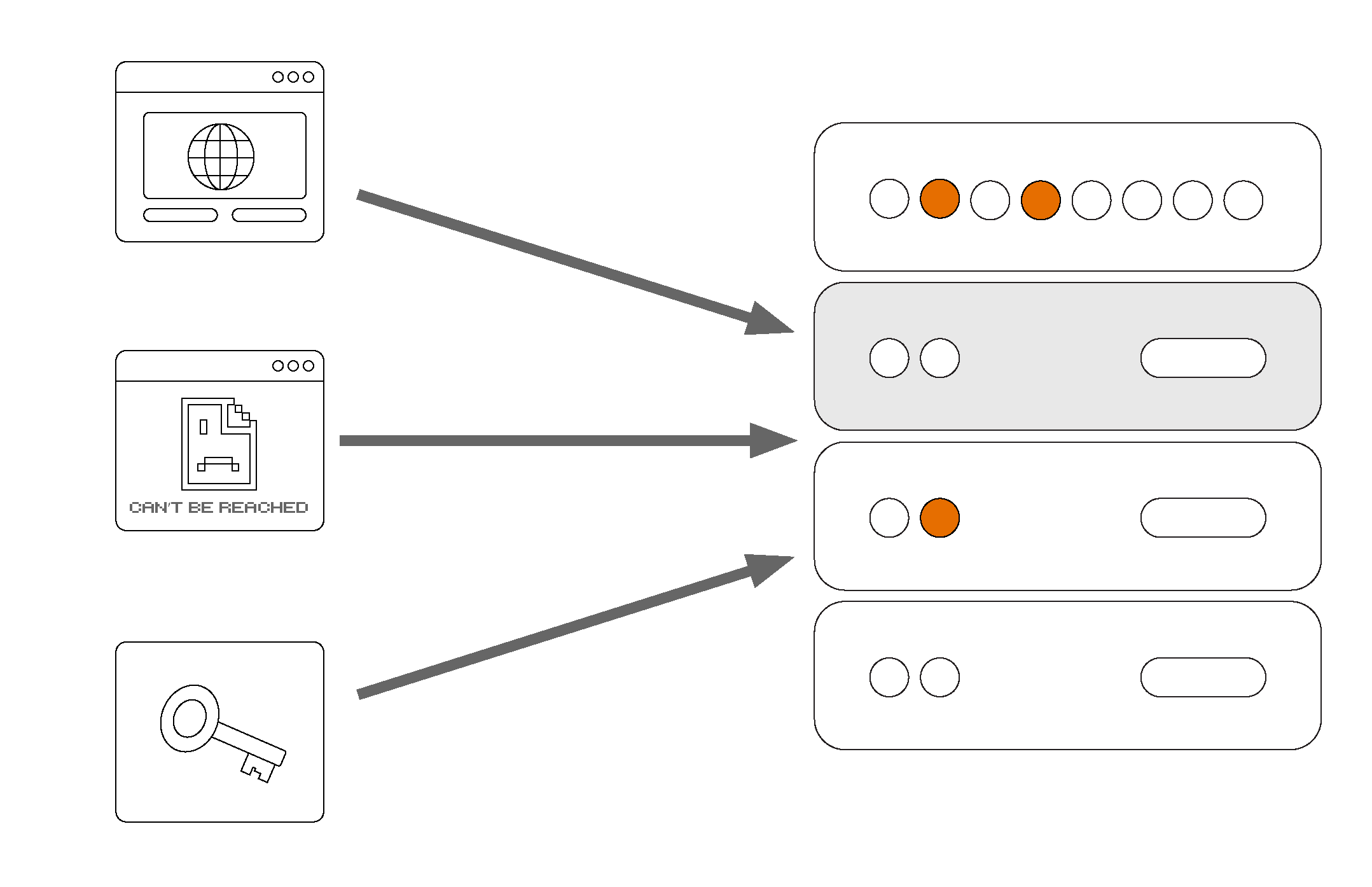
PowerDNS Recursor Plexus instantly helps to repopulate the record cache of a newly started Recursor. By securely retrieving cache data from active peers, it prevents the resolver from starting with an empty cache. This eliminates the need to re-perform recursive lookups to rebuild record cache entries and DNSSEC cache data.
![Plexus - Resolver Cache Sharing_2026-03-10-1](https://www.powerdns.com/hubfs/PowerDNS/images/Plexus%20-%20Resolver%20Cache%20Sharing_2026-03-10-1.png)

![Plexus - Authoritative Intelligence Sharing_2026-03-10-1](https://www.powerdns.com/hubfs/PowerDNS/images/Plexus%20-%20Authoritative%20Intelligence%20Sharing_2026-03-10-1.png)

LEARN

BOOTSTRAP RESOLVERS WITH PERFORMANCE DATA

### **Authoritative Intelligence Sharing**

Newly started PowerDNS Recursors are immediately bootstraped with authoritative server performance intelligence from running peers.

PowerDNS Recursor Plexus distributes a measured authoritative NS speed table, including information about response times, timeout history, NS rankings, and RTT values. This ensures that restarted resolvers immediately prefer the fastest and most reliable authoritative servers – without having to relearn performance characteristics from scratch.

Curious to learn more? Want to dive deeper into PowerDNS Plexus? Check out the product sheet and our documentation for more details.

[Documentation](https://doc.powerdns.com/recursor-plexus/latest/index.html)

[Product Sheet](https://www.powerdns.com/hubfs/pdf/product_sheets/PowerDNS_Recursor_Plexus.pdf?hsLang=en)

DISTRIBUTE

ENABLE ASYNCHRONOUS STATE SHARING

### **A PowerDNS Recursor Mesh**

PowerDNS Recursor Plexus establishes a mesh network between individual PowerDNS Recursor instances. Using the lightweight and robust NATS messaging system, Plexus enables asynchronous state synchronization without requiring direct, real-time sender-receiver relationships. The result is a scalable, resilient architecture designed for modern DNS environments.

![Plexus - A PowerDNS Recursor Mesh_2026-03-10-1](https://www.powerdns.com/hubfs/PowerDNS/images/Plexus%20-%20A%20PowerDNS%20Recursor%20Mesh_2026-03-10-1.png)

#### PowerDNS Recursor Plexus Benefits at a Glance

![Plexus icon - seamless state synchronization_2026-03-10](https://www.powerdns.com/hs-fs/hubfs/PowerDNS/images/Plexus%20icon%20-%20seamless%20state%20synchronization_2026-03-10.png?width=120&name=Plexus%20icon%20-%20seamless%20state%20synchronization_2026-03-10.png)

Seamless state synchronization between PowerDNS Recursor instances powered by NATS messaging.

![Plexus icon - eliminates costly warm up phases_2026-03-10](https://www.powerdns.com/hs-fs/hubfs/PowerDNS/images/Plexus%20icon%20-%20eliminates%20costly%20warm%20up%20phases_2026-03-10.png?width=120&name=Plexus%20icon%20-%20eliminates%20costly%20warm%20up%20phases_2026-03-10.png)

Eliminates costly warm-up phases by preserving and restoring cache intelligence.

![Plexus icon - authoritative server performance insights_2026-03-10](https://www.powerdns.com/hs-fs/hubfs/PowerDNS/images/Plexus%20icon%20-%20authoritative%20server%20performance%20insights_2026-03-10.png?width=120&name=Plexus%20icon%20-%20authoritative%20server%20performance%20insights_2026-03-10.png)

Instant access to authoritative server performance insights, including response characteristics.

![Plexus - low latencx](https://www.powerdns.com/hs-fs/hubfs/201%20878s%20pc-01-1.png?width=120&name=201%20878s%20pc-01-1.png)

Delivers consistently low latency, fewer timeouts, and highly stable DNS performance - even after restarts.

Learn how PowerDNS Recursor Plexus can stabilize DNS performance in your environment.

[Contact Us](https://www.powerdns.com/contact-us?hsLang=en)

No h1: Give each one h1 that says what the page is.

The figures

59 pages, set against the 169,560 sites with figures.

See its rivals
Readablehigher is better
100%59 of 59 pages
All 169,560 sitesBetter than 47%

Pages whose own text is in the HTML the server sends, enough of it for their kind.

Cleanhigher is better
66%middle page
All 169,560 sitesBetter than 44%

Of the words before script, the share that are the page and not menus, footer and forms. 3 pages are not measured, with no <main> or no words.

Costshown, never scored
107,334tokens
About 1,819 a page

To read every page once. A long page that answers well is not worse for it. Tokens are estimated at about 4 characters each.

How its pages spread on Clean

Its middle, 66%

56 pages measured. Not measured: 3 with no <main> or no words.

Against its rivals

The sites nearest it by what they do, with figures. Close means similar work, not better.

Readinghigher is betterCostnot scored
SiteReadableCleanTokens a page
powerdns.comThis site, 59 pages100%66%1,819
ns1.com1 page100%None3,950
whatsmydns.net97 pages88%None753
gigenet.com100 pages100%65%2,552

First of 4 on Readable, first on Clean.

AI crawler access

What robots.txt says to each, as read on October 24, 2026. 8 of 8 may read the site.

Open robots.txt
Crawlerrobots.txt saysUsed forThe line that decides
GPTBotOpenAINot namedTraining modelsFalls to User-agent: *
OAI-SearchBotOpenAINot namedChatGPT searchFalls to User-agent: *
ChatGPT-UserOpenAINot namedA page a person asks aboutFalls to User-agent: *
ClaudeBotAnthropicNot namedTraining modelsFalls to User-agent: *
Claude-SearchBotAnthropicNot namedClaude’s searchFalls to User-agent: *
PerplexityBotPerplexityNot namedPerplexity searchFalls to User-agent: *
Google-ExtendedGoogleNot namedTraining GeminiFalls to User-agent: *
bingbotMicrosoftNot namedBing and CopilotFalls to User-agent: *

Every AI crawler mttr checks may read it. Not named means the rules for every crawler apply.

Every page

Worst first. Each opens in Agent View at the top.

10 pages of 59 lose something. Pick a loss to see what to do about it.Open the action plan

What an agent getshigher is betterSignalsCostnot scored
PageWordsCleanReadableMain headingTokensWhat it loses
/blog-listing215No <main>YesYes1,708No <main>
/index.html238No <main>YesYes572No <main>
/tag/news697No <main>YesYes3,598No <main>
/test-38058%YesNone169No h1
/recursor-plexus39265%YesNone1,143No h1
/zonecontrol41467%YesNone982No h1
/dstore44970%YesNone1,006No h1
/dnsdist-defender45270%YesNone990No h1
/powerdns-recursor61178%YesNone1,271No h1
/single-pane-of-glass-add-on93282%YesNone1,855No h1
/powerdns-feedback32%YesYes7Nothing
/powerdns-updates114%YesYes42Nothing
/request-meeting168%YesYes26Nothing
/contact-us219%YesYes29Nothing
/global-technology-provider-case-study2311%YesYes39Nothing
/telco-strategies-for-consumer-security-2026-report2712%YesYes45Nothing
/third-party-components-and-licenses8130%YesYes245Nothing
/commercial-support-operating-systems16546%YesYes386Nothing
/imprint16546%YesYes358Nothing
/booklets15048%YesYes302Nothing
/consultation19751%YesYes470Nothing
/powerdns-community21452%YesYes597Nothing
/commercial-support22653%YesYes474Nothing
/downloads24756%YesYes577Nothing
/migration27858%YesYes695Nothing
The worst 25 of 59 pages.Show all 59

Show where it stands

A card, a badge and a line, each with the figures.

powerdns.com in Agent View: 100% readable
1200 by 630, for linksDownload

A badge for the site

Agent View: 100% readable
<a href="https://mttr.si/agent-view/powerdns.com"><img src="https://mttr.si/agent-view/powerdns.com/badge.svg" alt="Agent View: 100% readable, 66% clean" height="20"></a>
Drawn again after every read

The figures in one line

powerdns.com in Agent View: 100% of pages readable, better than 47% of sites; 66% clean; 107,334 tokens to read all 59 pages. mttr.si/agent-view/powerdns.com

What to do next

Fix the pages, let an agent do it, and read the site again to see the figures move.

Fix what agents miss

10pages lose something
  • Give 7 pages a main headingClearer
  • Wrap 3 pages in <main>Clean measured
Open the action plan

Connect your agent

Claude Code, Codex or Cursor reads the site’s fixes over MCP, fixes a page in your code, has mttr read it again, and checks the fix landed.

https://mttr.si/mcp
Set up an agent

Claim the site

Prove it is yours with a DNS record or a file. Your agent can then reach its reads and jobs, and set each change to wait for your approval.

Claim the site

Drawn from the HTML mttr fetched on its read of October 24, 2026, not a screenshot, and only from the 59 pages read. An assistant’s own reader may differ. Tokens are estimated at about 4 characters each. A site an agent reads well is not a site an assistant cites.

Agent Viewpowerdns.com Close Esc
Recursor Plexus | Add-on
powerdns.com/recursor-plexus

1 of 8 images has no words, so an agent gets nothing of it.

No main heading

Skip to content

SolutionsMobile OperatorsUE DNSInfrastructure DNSParental ControlsMalware ProtectionDNS for ENUMCable & Broadband Operators

NEW

PowerDNS Recursor Plexus

No Cold Starts.
No Performance Drop.
Just Stable DNS.

Let's Discuss

Resolver restarts happen — after updates, configuration changes, or maintenance.

But every restart traditionally means lost cache, lost intelligence, and a costly warm-up phase.

In large-scale environments, these warm-up cycles quickly translate into measurable operational impact.

PowerDNS Recursor Plexus changes that.

As an add-on for PowerDNS Recursor, Plexus preserves and shares critical runtime state across Recursor instances using NATS-powered messaging.

  • Lower latency from the first query
  • Reduced upstream DNS traffic
  • Stable performance, even during maintenance

WARM START

POPULATE CACHE INSTANTLY

Resolver Cache Sharing

PowerDNS Recursor Plexus instantly helps to repopulate the record cache of a newly started Recursor. By securely retrieving cache data from active peers, it prevents the resolver from starting with an empty cache. This eliminates the need to re-perform recursive lookups to rebuild record cache entries and DNSSEC cache data.
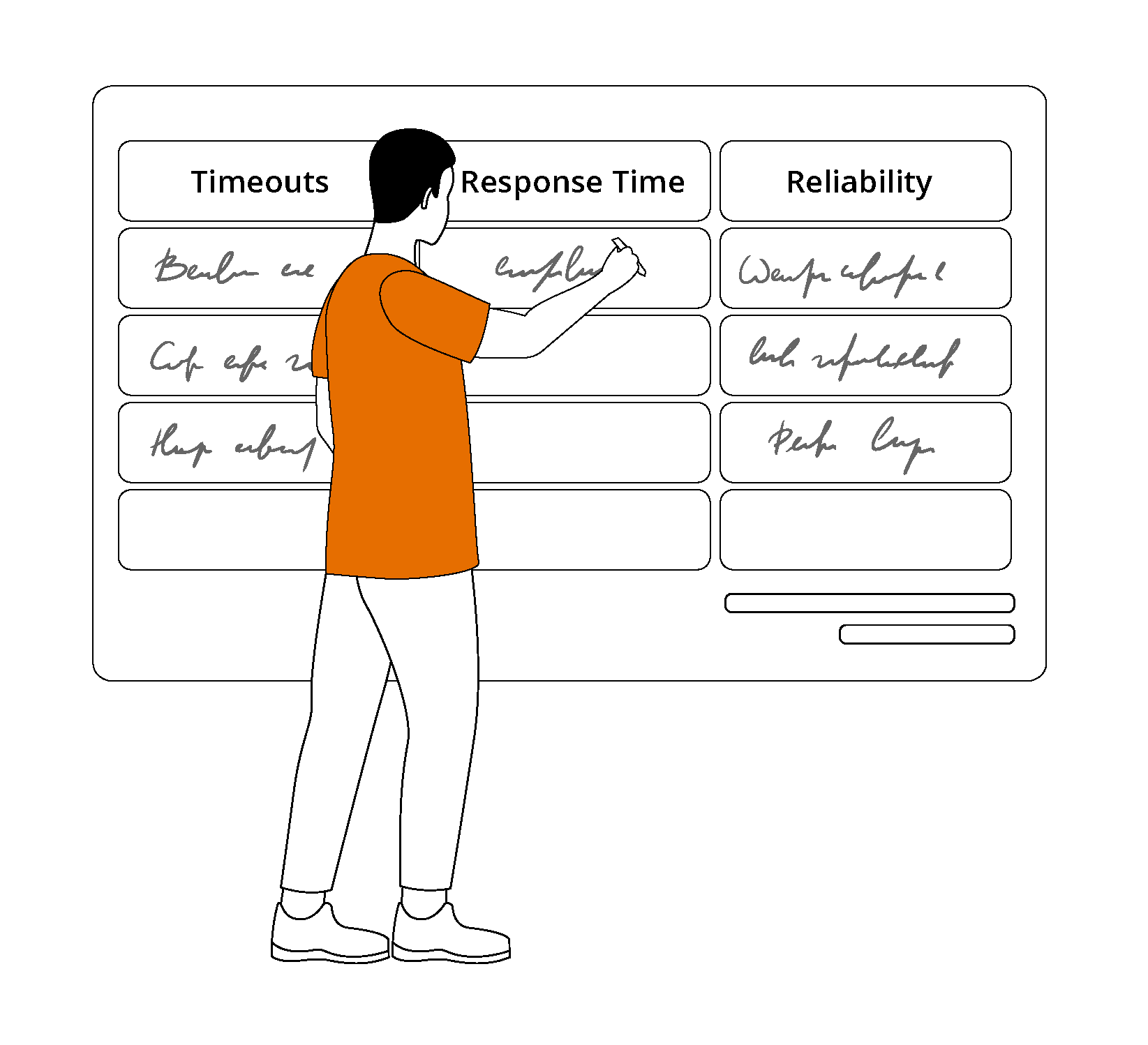
Image: Plexus - Resolver Cache Sharing_2026-03-10-1

Image: Plexus - Authoritative Intelligence Sharing_2026-03-10-1

LEARN

BOOTSTRAP RESOLVERS WITH PERFORMANCE DATA

Authoritative Intelligence Sharing

Newly started PowerDNS Recursors are immediately bootstraped with authoritative server performance intelligence from running peers.

PowerDNS Recursor Plexus distributes a measured authoritative NS speed table, including information about response times, timeout history, NS rankings, and RTT values. This ensures that restarted resolvers immediately prefer the fastest and most reliable authoritative servers – without having to relearn performance characteristics from scratch.

Image with no words

Curious to learn more?

Want to dive deeper into PowerDNS Plexus?

Check out the product sheet and our documentation for more details.

Documentation

Product Sheet

DISTRIBUTE

ENABLE ASYNCHRONOUS STATE SHARING

A PowerDNS Recursor Mesh

PowerDNS Recursor Plexus establishes a mesh network between individual PowerDNS Recursor instances. Using the lightweight and robust NATS messaging system, Plexus enables asynchronous state synchronization without requiring direct, real-time sender-receiver relationships. The result is a scalable, resilient architecture designed for modern DNS environments.
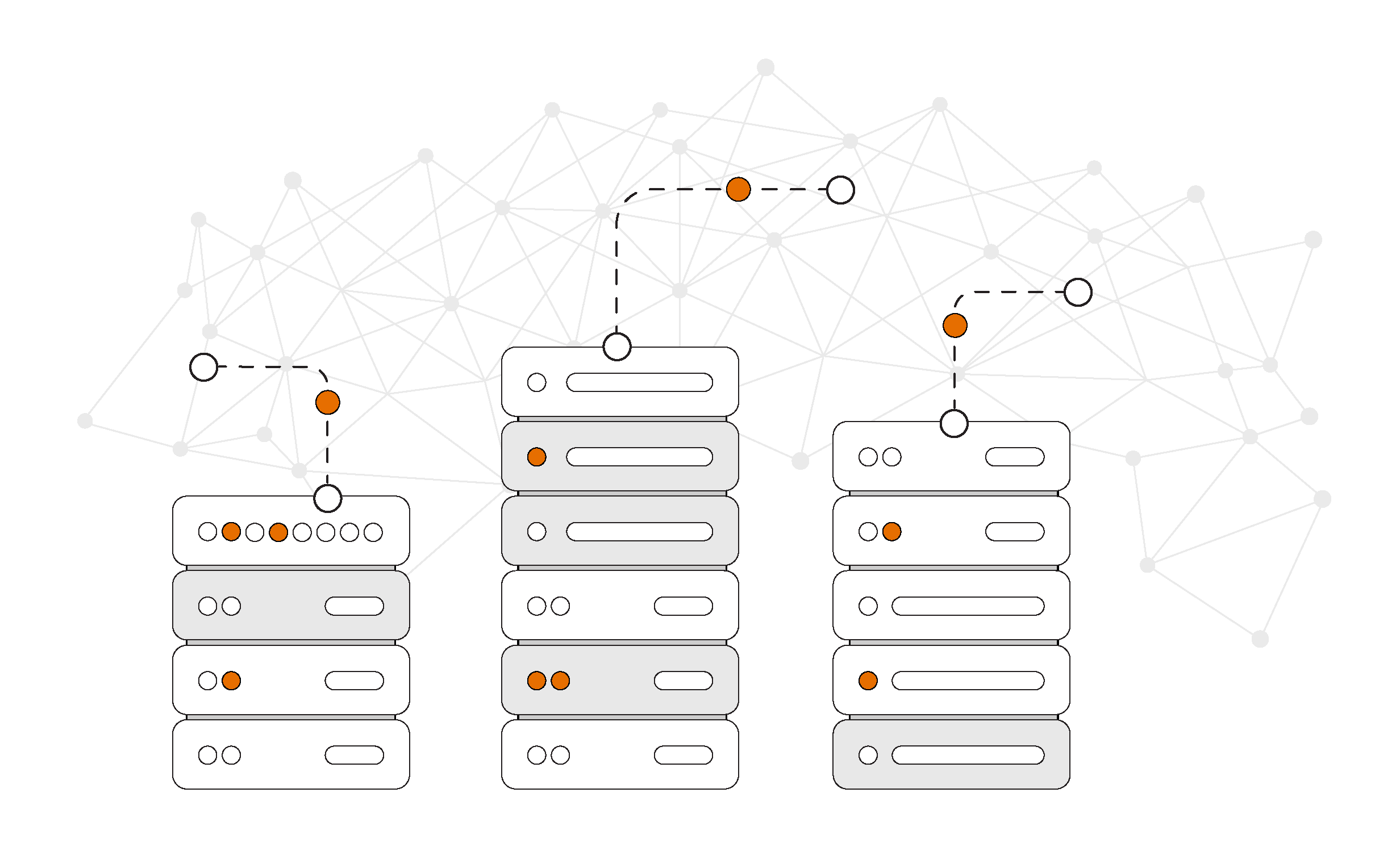
Image: Plexus - A PowerDNS Recursor Mesh_2026-03-10-1

PowerDNS Recursor Plexus Benefits at a Glance

Image: Plexus icon - seamless state synchronization_2026-03-10

Seamless state synchronization between PowerDNS Recursor instances powered by NATS messaging.

Image: Plexus icon - eliminates costly warm up phases_2026-03-10

Eliminates costly warm-up phases by preserving and restoring cache intelligence.

Image: Plexus icon - authoritative server performance insights_2026-03-10

Instant access to authoritative server performance insights, including response characteristics.

Image: Plexus - low latencx

Delivers consistently low latency, fewer timeouts, and highly stable DNS performance - even after restarts.

Learn how PowerDNS Recursor Plexus can stabilize DNS performance in your environment.

Contact Us

MastodonLinkedInGitHubBlueskyCompanyCareersNewsBlog

Drawn from the HTML mttr fetched, not a screenshot.
page.md392 words, about 1,143 tokens
NEW

## PowerDNS Recursor Plexus

### **No** Cold Starts. **No** Performance Drop. **Just** Stable DNS.

[Let's Discuss](https://www.powerdns.com/contact-us?hsLang=en)

**Resolver restarts happen** — after updates, configuration changes, or maintenance.

But every restart traditionally means **lost cache**, **lost intelligence**, and a **costly warm-up phase**.
In large-scale environments, these warm-up cycles quickly translate into measurable operational impact.

##### **PowerDNS Recursor Plexus changes that.**

As an add-on for PowerDNS Recursor, Plexus preserves and shares critical runtime state across Recursor instances using NATS-powered messaging.

- Lower latency from the first query
- Reduced upstream DNS traffic
- Stable performance, even during maintenance

WARM START

POPULATE CACHE INSTANTLY

### **Resolver Cache Sharing**

PowerDNS Recursor Plexus instantly helps to repopulate the record cache of a newly started Recursor. By securely retrieving cache data from active peers, it prevents the resolver from starting with an empty cache. This eliminates the need to re-perform recursive lookups to rebuild record cache entries and DNSSEC cache data.

![Plexus - Resolver Cache Sharing_2026-03-10-1](https://www.powerdns.com/hubfs/PowerDNS/images/Plexus%20-%20Resolver%20Cache%20Sharing_2026-03-10-1.png)

![Plexus - Authoritative Intelligence Sharing_2026-03-10-1](https://www.powerdns.com/hubfs/PowerDNS/images/Plexus%20-%20Authoritative%20Intelligence%20Sharing_2026-03-10-1.png)

LEARN

BOOTSTRAP RESOLVERS WITH PERFORMANCE DATA

### **Authoritative Intelligence Sharing**

Newly started PowerDNS Recursors are immediately bootstraped with authoritative server performance intelligence from running peers.

PowerDNS Recursor Plexus distributes a measured authoritative NS speed table, including information about response times, timeout history, NS rankings, and RTT values. This ensures that restarted resolvers immediately prefer the fastest and most reliable authoritative servers – without having to relearn performance characteristics from scratch.

Curious to learn more? Want to dive deeper into PowerDNS Plexus? Check out the product sheet and our documentation for more details.

[Documentation](https://doc.powerdns.com/recursor-plexus/latest/index.html)

[Product Sheet](https://www.powerdns.com/hubfs/pdf/product_sheets/PowerDNS_Recursor_Plexus.pdf?hsLang=en)

DISTRIBUTE

ENABLE ASYNCHRONOUS STATE SHARING

### **A PowerDNS Recursor Mesh**

PowerDNS Recursor Plexus establishes a mesh network between individual PowerDNS Recursor instances. Using the lightweight and robust NATS messaging system, Plexus enables asynchronous state synchronization without requiring direct, real-time sender-receiver relationships. The result is a scalable, resilient architecture designed for modern DNS environments.

![Plexus - A PowerDNS Recursor Mesh_2026-03-10-1](https://www.powerdns.com/hubfs/PowerDNS/images/Plexus%20-%20A%20PowerDNS%20Recursor%20Mesh_2026-03-10-1.png)

#### PowerDNS Recursor Plexus Benefits at a Glance

![Plexus icon - seamless state synchronization_2026-03-10](https://www.powerdns.com/hs-fs/hubfs/PowerDNS/images/Plexus%20icon%20-%20seamless%20state%20synchronization_2026-03-10.png?width=120&name=Plexus%20icon%20-%20seamless%20state%20synchronization_2026-03-10.png)

Seamless state synchronization between PowerDNS Recursor instances powered by NATS messaging.

![Plexus icon - eliminates costly warm up phases_2026-03-10](https://www.powerdns.com/hs-fs/hubfs/PowerDNS/images/Plexus%20icon%20-%20eliminates%20costly%20warm%20up%20phases_2026-03-10.png?width=120&name=Plexus%20icon%20-%20eliminates%20costly%20warm%20up%20phases_2026-03-10.png)

Eliminates costly warm-up phases by preserving and restoring cache intelligence.

![Plexus icon - authoritative server performance insights_2026-03-10](https://www.powerdns.com/hs-fs/hubfs/PowerDNS/images/Plexus%20icon%20-%20authoritative%20server%20performance%20insights_2026-03-10.png?width=120&name=Plexus%20icon%20-%20authoritative%20server%20performance%20insights_2026-03-10.png)

Instant access to authoritative server performance insights, including response characteristics.

![Plexus - low latencx](https://www.powerdns.com/hs-fs/hubfs/201%20878s%20pc-01-1.png?width=120&name=201%20878s%20pc-01-1.png)

Delivers consistently low latency, fewer timeouts, and highly stable DNS performance - even after restarts.

Learn how PowerDNS Recursor Plexus can stabilize DNS performance in your environment.

[Contact Us](https://www.powerdns.com/contact-us?hsLang=en)
Drawn from the HTML mttr fetched, not a screenshot. An assistant’s own reader may differ.Tokens are estimated at about 4 characters each.
